Decorum Will Save Us, You Moron

Decorum Will Save Us, You Moron

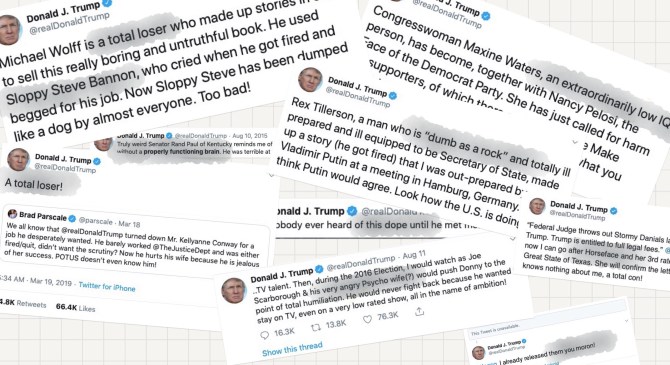
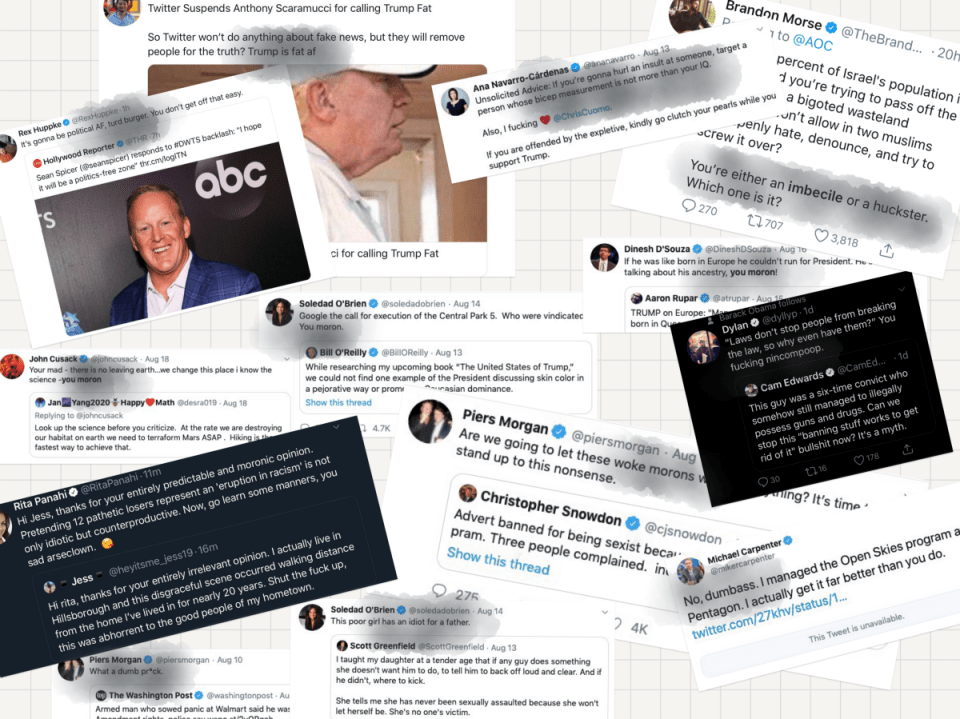
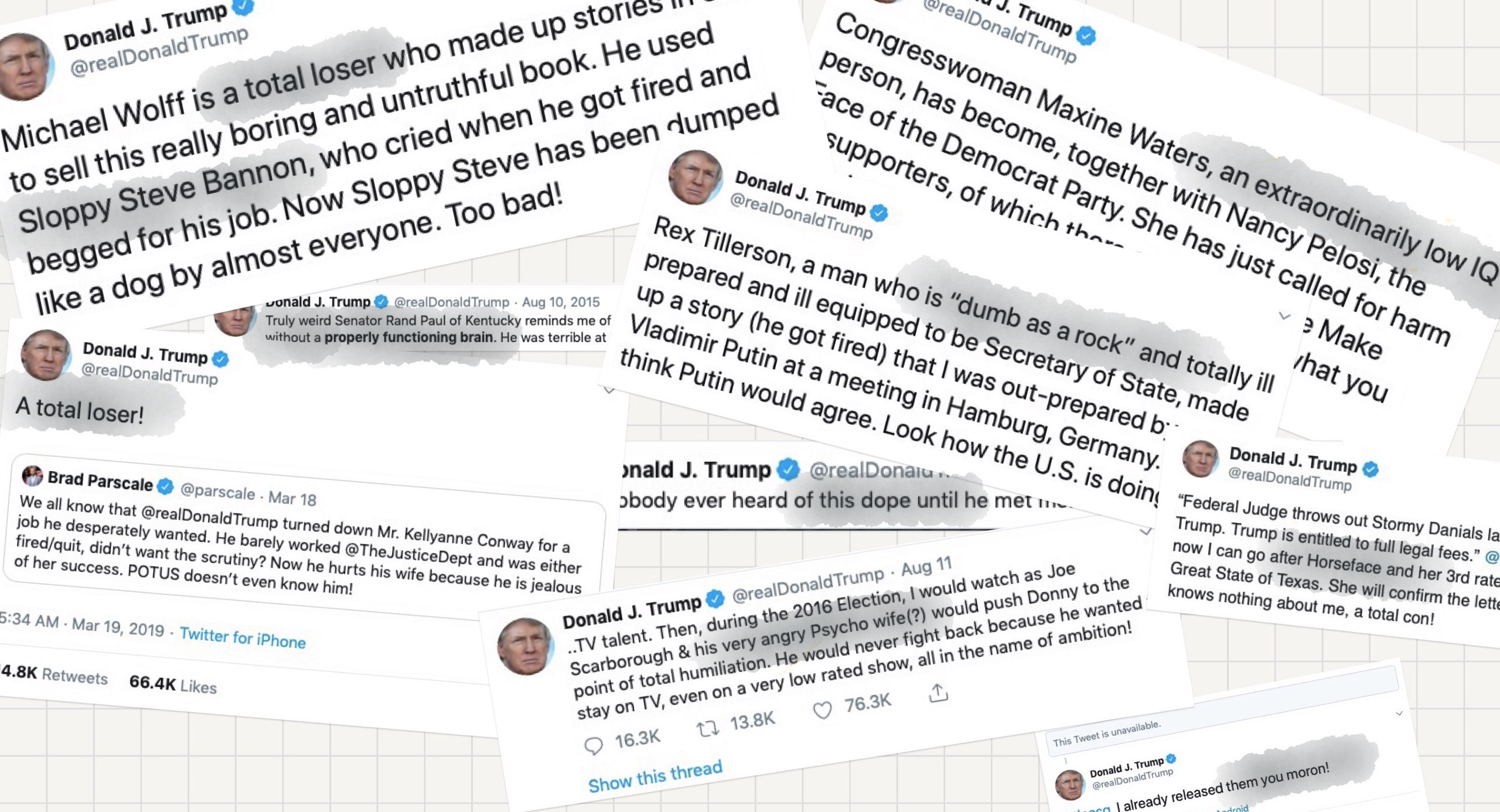
You’re a professional, you idiot. You’ve worked your entire adult life to achieve respect in the field of your choice and you were just getting used to seeing the term “expert” in your bio when the cataclysm-that-is-the-Internet came along and turned your dreams of contributing knowledge and insight to the progress of humanity into lowbrow waking nightmares. Now you spend your days online, which is to say that you’re physically somewhere in the world, everyone is somewhere, but your mind isn’t focused on your immediate surroundings, your walls, your floors, your children, you negligent imbecile. Instead, you’re emotionally elsewhere, pulsing thoughts with millions of other people’s thoughts, people who are equally there-but-not-there; people who’ve shown up, uninvited, just like you; people who’re anonymous and not of your choosing, who may or may not know things, and you engage them randomly depending on your mood and the scant remainder of your finite daily willpower, you unfathomably stupid jerk. You’re interacting with people you would never have crossed paths with if not for the internet, which would be a miracle and a blessing except that, day after day, hour after hour, they predominantly require you to correct their falsehoods and wrongheaded assumptions, and hold them accountable for their basest, most repellent prejudices, and you oblige them, you dumbass! You throw down facts and historical context, insights and morally sound thinking, but you don’t just leave it there, do you, you mindless cretin. No, you do what you never dreamed you’d do in all of those years of reputation-building that led to now: you publicly call a complete stranger an ass clown. In the absense of inspirational leadership and national identity, you cave, you schmuck, and sink to the lowest possible rung of human interaction, the rung where cruel, douchebag power mongers hang out. From down there, everything you shout into the ether sounds small, and less than, and angry, you worthless P.O.S. And all of the people who turn to you for expertise and role-modeling, they follow you down there because that’s where you’ve chosen to live, you slob. You’re leading alright! Leading millions of people down the drain, you weak, visionless, soft-brained piece of excrement.
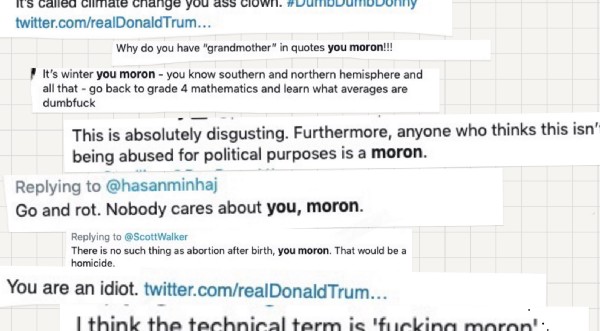
If there was a shred of evidence, even a single study, that proved calling people morons and idiots and low I.Q. imbeciles had the effect of motivating them to reconsider their views, or bettered the lives of their victims, or just got them to plain shut-up, then your tweets would make perfect sense. You’d be a hero, you pathetic dope. Instead, time and again, the only reliable outcomes from insulting someone are fist-fights, exponentially more hate, and a swell of entitlement to the festering rage and alienation that sits pent up in all of us, ready to savage the next person who ticks us off and feel damn justified doing it. Well done! You did that! Way to be, you fetid piece of garbage.

Did it ever occur to you that the reason we need a police force is for the comparatively tiny number of people who can’t police themselves? That the vast majority of us choose not to break the law for the same reason we choose not to insult people — not because we’re masochists and we get off giving assholes a pass, but because we aspire to civility? Do you realize that anarchy is just one decision away? That what makes each of us better than the worst of our society is the ability to control our impulses, you deplorable reject? That you’re following the lead of the guy who separates kids from parents and holds them all in cages every time you call someone a moron, you stinking piece of trash? Did you stop just once to consider that no amount of fact-checking and moral-vetting matters if it’s accompanied by a black eye, you total, complete and utter dipshit?

What to do instead. Mmmm, I don’t know, jackass. Maybe climb back out of the sewer. Try deleting the insults and stick with the facts and perspective. It’s surprising how powerful the truth is when the messenger’s pre-teen angst isn’t butted up to it like a rapey locker room weasel. If someone says something so ridiculously stupid that you’re tempted to call them a name, take the high road instead, or zip it. Be a study in contrast. Don’t jump in the ring.

Meanwhile, if, deep down, you really do care about elevating public dialogue (and let’s be honest, that’s not too challenging these days, especially for you) then get creative. You’re an expert. You’re a role model. People are listening. React intelligently in the online space when someone behaves ignorantly or monstrously. You’re not an average joe who occasionally slips. You have a platform. Be accountable to it. People will amplify whatever you do, so set an example. Forget #BeBest. Just #BeBetter. Remember that person you wanted to be when you started out in life? #BeHer. #BeHim. #BeYou.
Spectre’s Other M

Spectre’s Other M

The latest outing from James Bond serves up a host of Fleming tropes, from ski slope chases and black tie flirtations to the bad guy who just won’t die. While M and C don’t normally stand for Mouse and Cat, in Spectre perhaps they should. Size matters but smaller is better. I sat down with the Bond franchise’s lesser-known field agent, Millicent Brie-Jones, to chat about her latest role, the cat-and-mouse game, and why the Hollywood wage gap is such a big deal.

EC McCarthy: This is your first franchise film. How did it differ from past roles?

Millicent Brie-Jones: For the first time in my professional career, I’m portrayed in a realistic light. It’s a substantial part. I don’t eat cheese onscreen. Nobody enhanced my ears or overdubbed me in a squeaky voice. I stare Bond down, vulnerable and unarmed. With the sheer force of my gaze I convince him that peace is preferable to violence. I mean, without my character the plot just stops right there in that room. There’s nowhere to go. This is a watershed moment for mice everywhere.

ECM: You shot mostly on location in Tangiers. Do you speak Spanish?

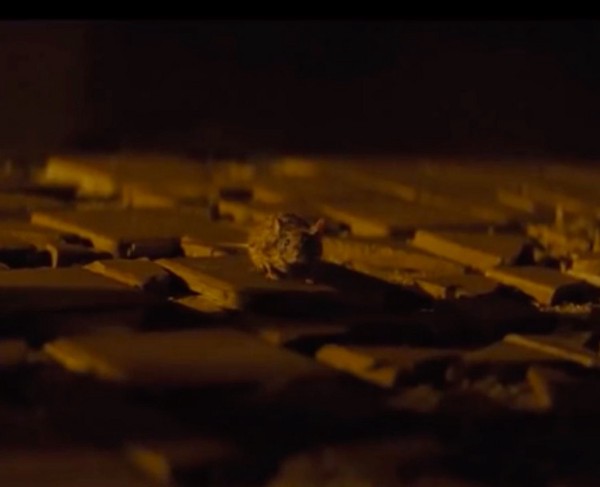
Milicent Brie-Jones in Spectre

MBJ: I didn’t prior to this film, and I was admittedly a bit nervous, but that’s why I do this work! The studio got me a language coach, and Sam [Mendes] did ask me to improvise a bit on our second day, just for coverage. I also stood off-camera for Daniel [Craig]’s stuff, and we bantered to ratchet up the tension. It’s a subtle scene. I was happy with my accent, but in the end it’s the Jaws effect — the less you see of me, the more powerful I am.

ECM: Did you train at all? What was your workout regimen?

MBJ: I like to work out, and I love being outdoors. It’s never been an issue for me, so I just did what I always do.

ECM: What’s an average workout for you?

MBJ: Mostly I run up and down the tree on my property, perhaps increasing the intensity a bit, and lots of pull-ups. [flexing her biceps] Very proud of these. Michelle Obama is my idol.

ECM: In Spectre, it’s implied that a cat…

MBJ: I don’t want to comment on cats.

ECM: There’s been speculation that the cat…

MBJ: The press is always trying to stir up controversy. There’s nothing to talk about.

ECM: Did you meet Schmidt Redgrave [who played the role of Blofeld’s Persian cat]?

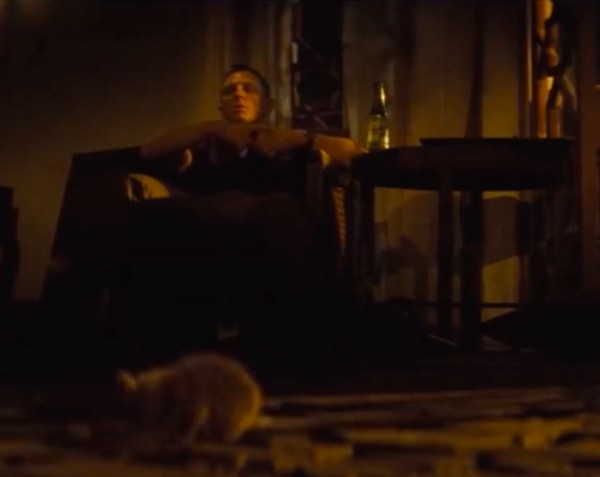
Milicent Brie-Jones and Daniel Craig in Spectre

MBJ: It was like so many films I’ve done, where I’m familiar with Schmidt’s work, and such an admirer of his family, but there was no crossover on the schedule. I think he shot exclusively in the desert? Look, I know you’re fishing for a sound bite, but I have to disappoint you. The wage gap isn’t a personal issue, it’s about what’s fair, and implying animosity between professionals does all of us a disservice. What I will say, and I said this to Sam and Barbara [Broccoli], is that I was disappointed there was no onscreen cat and mouse confrontation of any kind. I think audiences are ready to see me and Schmidt go head-to-head. They can handle it. I can do so much more — I’m a black belt, for crying out loud. And I’ve read that Schmidt is a crackerjack archer. This was a missed opportunity, as far as I’m concerned, but I understand the focus has to be on Bond. He sells the tickets.

ECM: Finally, as the lone mouse on set, did you feel welcomed and comfortable?

MBJ: More than [on] any other film I’ve done. The crew was amazing. Nobody freaked out when I hung out on the craft service table. The actors ate with me. It was collegial and I learned a lot. He’ll kill me for saying this, but Daniel drops an unusual amount of food because he talks when he chews. I’ll eat under him any day!

ECM: [laughter] He makes a mess?

MBJ: [chuckling] Raining crumbs.

ECM: Thank you, Millicent, for taking the time to speak with me.

MBJ: Any time!

Satire, Foreign Policy and the Sony Hack

Satire, Foreign Policy and the Sony Hack

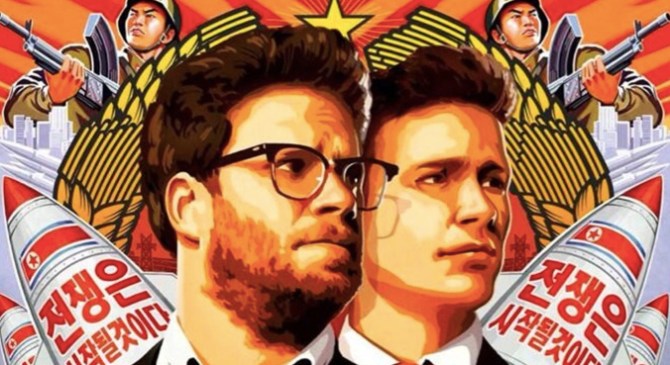
Personally, I would prefer to live in a world where Seth Rogen and James Franco aren’t our foreign policy drivers. Everyone who works at Sony probably feels the same way right now, and quite a few busy people at the State Department, too. North Korea is a loose cannon with a long history of erratic foreign and domestic policies, but the aftermath of the Sony hack has seen America making equally temperamental choices. America is playing down to a lunatic’s level and ignoring lessons it might have learned from 9/11. The notion that America’s free speech is being messed with because The Interview is in distribution limbo is the kind of histrionic overstatement that citizens of a superpower make when they don’t have an accurate self-image.

Prior to the hacking incident, I saw a trailer for The Interview and had a visceral reaction: putting this film out is a terrible idea. I work as a screenwriter now, but my college degree was earned at Georgetown’s School of Foreign Service with a specialty in comparative studies of Asia and Europe. My thesis was on power in the Asian region. I lived and traveled extensively in Asia. From an admittedly dated knowledge base, I feel confident saying that anyone who thinks they won’t get a response from North Korea for depicting the bloody assassination of its leader, images that will be exported globally through the American marketing and distribution machine, is truly living in a fantasy world. If the tables were turned and a film studio in an adversarial country depicted the violent assassination of our leader as comedy and, most importantly, had the power to share that film worldwide, we’d be disgusted and outraged. America has resources and official diplomatic channels to respond to that sort of propaganda attack. We’d start by demanding an apology. In the case of The Interview, America is the perpetrator and we’ve gone after an isolated, unstable dictatorship. Sony foolishly picked a fight with a cornered, rabid dog and dragged the entire country into the alley with them. America has no choice now but to stand behind a questionable film on principle. This is not a strong position.

Satire has a goal. It’s not toothless. Americans frequently, maddeningly blur the line between satire and bad behavior. In the worst cases, racism, misogyny and hate are passed off as comedy. In the middling cases, comedy promotes the status quo, which generally isn’t a good thing. For material to be satirical the writers must have a firm grasp of the issues, be skillful at self-examination, and have the goal of shifting people’s perceptions toward greater clarity. The South Park series comes to mind as an example of great satirical writing, as does The Simpsons. Tropic Thunder was an incredible satire of the film industry, with an edgy script that pushed far beyond discomfort into outright offense and insult. Those writers put Hollywood under the microscope and dissected with aplomb.

In contrast, bad behavior is poking fun at something — a person, an idea, a philosophy, a moral precept — without self-examination. While I don’t know Rogen or Franco personally and I have not watched The Interview, I struggle to be optimistic that Rogen has written a politically self-aware satire of America’s relationship to North Korea. I really enjoyed Rogen’s frat comedy Neighbors, and his upcoming Sausage Party sounds like it will keep his fans happy, but they’re two of many reasons I expect The Interview is no Catch-22 or Dr. Strangelove. The synopsis reads like a couple of stoner writers thought “dictators are stupid and wouldn’t it be funny if…” Well, the answer is no. America assassinating the leader of a foreign country isn’t funny at all and we shouldn’t be in the position of defending it as humorous or entertaining. Now we’re stuck promoting an image overseas that we’ll wield our considerable power in defense of our right to spend Christmas Day laughing at Kim Jong-un’s dismemberment at our hands. The film is a propaganda attack on North Korea’s sovereignty, intentional or otherwise, and one that America really doesn’t want to instigate. There are too many other fires burning.

In touting the release of The Interview as a symbol of our right to say or do anything we want, the American public is trading free speech for common sense and confusing comedy with xenophobia. Further, the aftermath of the initial data dump generated an ugly public conversation about celebrity emails and then about censorship and the perceived cowardice of the victims of the attack. In this way, the public and the media abetted the attackers. To suggest that Sony is “caving” or “capitulating” to people who are threatening violence to their employees and the general public is essentially to say that Sony should ignore their hostage situation. Until Sony is “released” or has outside protection, the company has no way to push back against their attacker. “Free speech” as a concept is not remotely in danger. Individuals and a company are in danger. Sony employees have already been terribly compromised by this cyberattack, and they’re under continued threat. Sony made a mistake with this film, but the company needs the country’s support to get through the situation. It’s important to grasp how effective we could be in pushing back against cyberattacks if we’re all on the same page. Instead, the hackers have forced us to get behind The Interview, a movie that promotes a threatening image of American foreign policy. No one wants to be in that situation. That’s the precedent we don’t want to set.

People who worry about the future of free speech in this country can rest easy. The fallout from The Interview potentially has more long-term positive affects on free speech than negative ones once the danger is over. For one thing, our awareness of how to wield American power in a technologically interconnected world will be greatly increased. We can learn from these mistakes. The film industry needed a recalibration in how it assesses its output and true reach. While this incident may make the Hollywood community fearful initially, the way the country stands behind Sony and deals with the hackers will ultimately embolden executives and talent to make smarter, sharper political films once they’ve shored up their vulnerabilities. Defiance is the backbone of change.

9/11 threw America into a state of fear that divided us. We continue to be divided, and easily distracted. It’s time to regroup so we can address crises like these successfully. America’s power lies dormant in a unified voice we’ve forgotten. Without it, we continue to be vulnerable to even the weakest dictators.