Nora Ephron, Heartburn and Everything is Copy

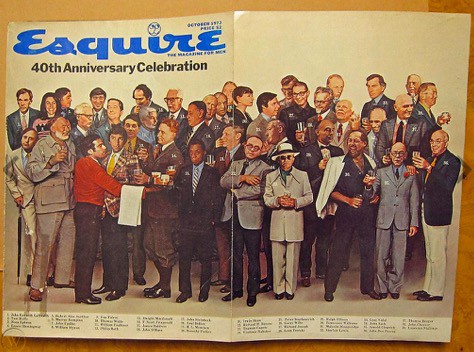
Nora Ephron, top row, second from the left; October 1973

At the end of Everything Is Copy, Jacob Bernstein’s insightful 2016 documentary about his mother’s life, there’s a clip of Nora Ephron discussing her final film, Julia & Julie, on Charlie Rose. She explains what the film is about — “Love” — but elaborates enthusiastically about the depiction of Julia Child’s “romantic marriage” to Paul Child. Of the relationship that plays out onscreen, Ephron says: “It’s a kind of marriage that actually exists. Thank god it does or people would accuse me of making this up! But there are guys who really do take enormous pleasure in their wives’ growth.” While her husband, Nick Pileggi, was reputedly one of those guys, her acknowledgement that these men are rare to the point of seeming fictitious exposes a dark truth about American culture, one we’re deeply invested in denying because it reflects so poorly on our national character. America is not teeming with well-adjusted men who encourage, let alone facilitate, the success of women. [Translation: If you can’t comfortably call yourself a feminist, dude, you’re a major part of the problem.]

There’s a fuse burning throughout Everything is Copy. Nora Ephron is gone but she feels alive for the duration of the film. This is not, as some reviewers opined, because of her work. Nor is it because she’s living on through her talented friends and family, although they shoulder her legacy beautifully. Ephron feels alive because she externalized her thinking process throughout her career. She performed self-reflection. It’s impossible to hear her words or watch her interviews without being drawn centripetally to the very moment she was in. We are all with Nora, processing, now, and almost always that means we’re processing a relationship, real or imagined, and parsing the exquisite differences between women and men from the point of view of an intelligent, outspoken woman. That Ephron was thorny and honest made her observations liberating; that she was an unabashed romantic made her absolutely inspiring.

In 2020, the internet is a broken faucet streaming endless first-person tales, but in 1982 there were exponentially fewer of these, and what was in print came almost entirely from men. In that moment, Ephron’s novel Heartburn, a lightly fictionalized tragicomic chronicle of her marriage to and divorce from famed journalist Carl Bernstein, was the ideal earthquake to rattle established norms. Ephron’s irreverent tone made a mockery of the unspoken rules that dictated how women should and shouldn’t behave when cheated on. Ephron was the wronged party, but she had a formidable voice that equaled Bernstein’s, so she stepped up and took control of the narrative with bravado socially unbecoming for a woman but culturally celebrated in a man.

Ephron’s choice to lay bare the private details of her marriage and Bernstein’s cheating was a gift to women everywhere. Her refusal to quietly accept the terms of “cheated-on wife” and instead write humorously and honestly about her experiences marked a turning point in women’s perception of marriage. Ephron engineered national dialogue about infidelity and divorce, and later, after much litigious handwringing, she and Mike Nichols pressed the message home through the film adaptation of the book.

Her justified anger woke people up to the double standards women were forced to live by, and the artificially-imposed conflict women faced over whether they could get angry at being lied to, and how. In other words, Ephron facilitated the earliest “conscious uncoupling,” although a better term would be “honest divorce.”

Quite a lot of Everything is Copy is devoted to Heartburn. There are questions of morality — was it fair to Carl Bernstein to air his dirty laundry in a novel and, more importantly, was it healthy for their two children to witness a protracted public battle between their parents — both questions laid at Ephron’s feet, despite the transgression belonging entirely to Bernstein. Alongside this retelling, Nora’s sisters — Delia, Amy and Hallie — describe the troubled family life they endured growing up, their parents’ alcoholism, and their cheating father. Ephron’s younger sister Hallie astutely notes that it was cruel of their father to deny his womanizing to his wife and children because his transgressions would have explained their mother’s crazy behavior. He was gaslighting them all with lethal consequences. Their mother, Phoebe Ephron, an Oscar-nominated screenwriter, died at the age of 57 of cirrosis and an overdose of sleeping pills. On learning this, I wondered if, beneath the vindictiveness, Nora actually wrote the book not for her mother, nor for herself, but for her children.

Ephron was determined not to die of a broken heart as her mother had, but in the shadow of her mother’s example she couldn’t have known with certainty that she could pull off the impossible, even as she holed up at editor Robert Gottlieb’s home in New York and furiously wrote her fateful first novel. If grief overtook Ephron the way it overtook her mother, then at least her children would have a manuscript with answers. Even if the book never made it to print, even if it took decades for her message to reveal itself, I can’t think of a better way to explain lovesick humanity to your children than through humorous, incisive, self-deprecating fiction. While Heartburn was perceived entirely as Ephron’s revenge against her cheating husband, this one-note interpretation came from male-dominated media commentary. Heartburn was an incredible sacrifice of privacy for Ephron, too, as she opened herself up to public scrutiny. In my experience, this sort of act is really only done in fundamental pursuit of salvation.

Her choice bore out. Her book was a success. Her life restarted and she ascended to greater heights in love and career. Meanwhile, a photograph of Ephron standing with Bernstein on either side of their college-aged son testified to a positive outcome for their family, certainly more positive than the fate of her own parents. The Ephron-Bernstein divorce may have been acrimonious, and her writing seemingly vengeful, but the act of bringing her pain out into the open saved her, and served as a hopeful example to women everywhere who needed permission to save themselves.

For that reason, the moment I wanted from Carl Bernstein in Everything Is Copy was a posthumous thank you to Nora. Crazy, I know, but hear me out: I wanted him to express gratitude for her bravery during an uncertain time, with the wisdom of all that came after. Everyone in the film acknowledges how hard it was on Bernstein to be cuckolded, and you can literally see the shivers ripple through even her closest friends at the thought of standing in the spotlight of Ephron’s glare. He’s not short on sympathy. However, Bernstein’s no dummy. He knows that Ephron showed women another way to deal with the pain of betrayal, a way that claimed a happy ending as a rightful outcome for anyone who has been abandoned or deceived. He’s certainly capable of acknowledging that Nora’s survival was an immeasurably better outcome for their sons than a version of her mother’s descent into madness and alcoholism. To the extent that she saved herself, she also gave Bernstein a better future. In 2020, that message needs to come home to millions of women, and it can only be conveyed by self-assured, intelligent, feminist men. It’s time for men to finally get it. Otherwise, I’m afraid we’re looking at four more years of Donald Trump and the end of democracy as we know it.

The question Jacob Bernstein poses in the documentary is a strong one, namely did his mother ultimately agree with the mantra she inherited from her mother. Is everything copy? Ephron lived by this mantra. She built an amazing career out of it. But at the end of her life, she reversed course. She died very much as she lived, with immediacy. The second half of Everything Is Copy deals with NORA’S BETRAYAL OF US. For many of her friends, her decision to hide her grave illness is a psychic palm print that still stings the cheek. By holding everyone at bay until the very end, Ephron demanded real-time self-reflection from capable, if reticent, friends who had to process her loss without preparation or direction. Nora left without giving instructions. They had to move on without her help.

There’s so much to love about Nora Ephron that a posthumous documentary about her can be unflinchingly honest and leave the audience only loving her more. It’s a flawfest that one imagines Ephron would have loved and hated — loved for the juicy truths, and hated that they were solely about her; hated because she couldn’t edit or comment; hated, most of all, because she’s no longer here and no longer writing the story. That last part? I hate it, too. We all do.

Everything is Copy is available to stream everywhere.
A response to Judd Apatow’s interview in Deadline: “Can Hollywood Turn Sex Scandals Into Meaningful…

A response to Judd Apatow’s interview in Deadline: “Can Hollywood Turn Sex Scandals Into Meaningful Reform?”

Dear Judd,

Thank you for stepping up and speaking out about this issue. You’re doing more than most people I know. Many of my own friends didn’t share my op-ed about sexual harassment on social media. People are powerfully averse to addressing this topic. I’m grateful you’re willing to tackle it. (It made my day to see “Mike Pence has some sort of mental problem” in print.)

Your definition of the problem and its complexities is, in my experience, correct. You say we need to “change the culture.” When you hear about a harasser you’re “never going to work with that person again,” which makes sense for someone who wields a lot of power. Most people don’t. Your solutions, unfortunately, only usefully apply to you and a handful of people. Please hear me out on this: your approach is going to be part of the problem in the long run.

When I was sexually harassed by my boss, a director on a studio film, I had nowhere to go. Who does someone on a crew talk to when the director is harassing them? Or the producer? Or the star? Your Deadline interview mentions sexual harassment training videos are currently shown to staff on TV productions. That’s seriously great; one area of the business where there’s a framework for starting work on the right note.

But you know like I do that on a film, made at a studio or independently, the process is a free-for all. It’s nearly impossible to get a movie greenlit. Everyone jockeys for their jobs for months. Once they’re there, a director is king (very rarely queen) of the production. The stars are revered. The cast and crew come together as a temporary family, often traveling on location together, staying in hotels, working long, strange hours, and socializing with each other during downtime, because who else is around? The cast and crew are at the mercy of the above-the-line people who are going flat out to meet insane deadlines. I don’t care how much sexual harassment training you give a cast and crew, speaking up about anything controversial puts the movie in jeopardy and could cost everyone their jobs. This is the nature of entertainment work that’s largely absent from the present discussion: across the board, entertainment workers are interdependent in highly unusual ways. One person really can take down a whole production. As we saw with Louis C.K., one person’s disgrace can bury a completed film and shut down multiple productions in 24 hours. It’s true that Ridley Scott’s decision to reshoot All The Money is going to provide jobs, but I don’t remember this having being done before on a completed film. It would be a huge step forward if this response became the norm.

Today, however, no one wants to hear complaints from anyone about anything when you make a movie. A second camera assistant was willing to walk on live train tracks because a director asked her to, and I wouldn’t judge her decision to acquiesce as extreme if it hadn’t ended in tragedy. (The fact that she was asked does make me extremely angry, though.) Your solution is to change the culture we’re working in, but do you honestly think a crew member on location, in Cambodia say, is going to rock the boat with a sexual harassment claim against a director? Culture is always going to be what we create within each production. If the director is toxic, the culture will be toxic. We need more formal solutions than “better culture.”

As for not working with people after you hear something about them, this is confusing advice. Hollywood is a town of storytellers. Gossip is the primary information machine in this business. Gossip has been weaponized against women for at least as long as I’ve worked out here. You mentioned Maureen O’Hara’s news clipping that circulated on twitter. She pointed out that the gossip machine was brutally effective at torture and character assassination. As you noted, women today are badmouthed as difficult, crazy, cold, not talented, not funny, and on, and on, and on, but your solution to the harassment and abuse problem is to expect people in the business to decide not to work with someone based on what they hear about them. You expect people to discern between lies about women and truths about men in the mountain of gossip they traffic in daily. That’s not feasible. The choice to work with Harvey Weinstein was not greedy for many people. It was a paycheck, and it came with baggage that could just as easily be true as false. That’s the nature of gossip.

It is also not necessarily greed that drives people to smooth over sexual assault claims when, in so many cases, they’re keeping the ship afloat for the hundreds of people who will lose employment if it goes down. In reading your piece I felt like you might have lost track of this. They’ve got horrible choices to make and many of them know it. I agree with you that the culture of the business has evolved to a point where it’s way too easy to make bad decisions, and I’m certainly not in any way defending anyone who has silenced a victim, but I’m unwilling to generalize that it’s always done out of greed. Only millionaires comfortably walk away from work when they smell something fishy. For the rest of us, those decisions border on impossible.

In my experience the most powerful reason people in Hollywood don’t speak up, or speak out, is fear of losing their proximity to fame. That’s true of everyone from assistants all the way up to studio heads. The right kind of famous for most people working in this industry is being celebrity-adjacent. It’s how you get jobs, jump onto projects, get your work read, get your movie made, and on, and on. Being there means you know how to keep secrets. Predators like Harvey who compulsively dominate and destroy women and verbally and physically assault men are protected by this dynamic because outing his behavior is a violation of the secret-keeping culture of celebrity. Clearly from your interview, your immediate focus is on reporting criminal activity, and I agree with you. It should be. However, Hollywood is full of criminal activity. Until recently, smoking a joint was illegal! I’m confident “discrete” will return as the most prized recommendation for any job after this intense house-cleaning is over. Hollywood may redefine its relationship to women, but it will also revert to a culture of secrecy. We may have to wait a generation before the culture truly shifts.

While we wait, here are a few solutions that came to me while reading your interview, useful for people working in and out of the business, that can bring about real change today:

1. It doesn’t matter how powerful you are, or aren’t, the first response to hearing someone has been assaulted is to ask them what they need from you. If they want to file a report or complaint, tell them you’ll support them. This addresses the problem of someone feeling too isolated to speak up.

2. Be a voice of reason if there is public push back, with the victim’s permission. (You speak to this in your interview, but not in a concrete way that involves the victim’s wishes; that part is so important.) Remind people that fame and financial success are not indicators of good character. This addresses the problem of powerful harassers having a louder voice and wider reach in the court of public opinion.

3. If you’re in a position of power, be mindful of who you elevate. Hold people accountable if they empower someone who does harm.

4. Whenever possible, formalize ways for victims to speak out.

5. Finally, be transparent in your hiring process and above all, HIRE DIVERSELY.

Thank you.

This letter responds to Judd Apatow’s interview in Deadline — “Can Hollywood Turn Sex Scandals Into Meaningful Reform?” http://deadline.com/2017/11/judd-apatow-harvey-weinstein-sex-scandal-reforms-commentary-breaking-news-1202204254/

My Sordid History of Believing I’m Wonder Woman

My Sordid History of Believing I’m Wonder Woman

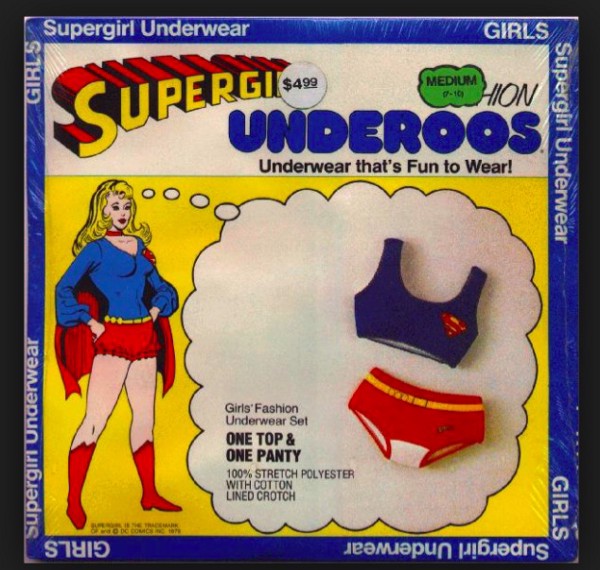
My wonderwomanhood began in London at age 5 when my visiting grandparents gave me a pair of American Underoos. They were blue on the top and red on the bottom with a yellow belt and three “buttons” that did absolutely nothing when you pressed them. I’d never heard of Wonder Woman before which was fortunate because it turned out these were Supergirl Underoos. Still, it was explained by my parents, using the visual aid of the packaging and a deft, long-forgotten reason for the large S on the tank top, that Wonder Woman was the owner of these unlikely undergarments; she had magical powers, incredible strength, speed and agility, and wearing this get-up would endow me with supernatural mojo.

I have always been a scientist. I was deeply skeptical. I wore the Underoos to school for weeks, patiently awaiting an opportunity to field test the veracity of what I’d been told. The day arrived when the teacher stepped out to the loo and the boys began their usual taunting. Henry was being particularly awful. He made Arabella and Jemima cry. I gave everyone fair warning that we girls were not to be trifled with. Henry went one taunt further and I had no choice but to make good on my threat. I locked everyone out of the classroom, took off my clothes and exploded into the hallway in my Supergirl Underoos, fists raised and screaming at the top of my lungs “I AM WONDER WOMAN!” For pure shock value, I give myself an A+. The girls cheered. The boys scattered. Henry hid in the broom closet. The teacher returned and politely asked me to put my clothes back on which I was more than happy to do. I was freezing, but I was no longer skeptical.

No endeavor I’ve undertaken since has been so cleanly successful. Like a lab technician trying to replicate my results, I blame the overwhelming success of this first outing for my subsequent compulsive, often misguided attempts at speaking out against injustice.

There was the fact-heavy lecture on everything Madonna has done for women which I delivered to an all-male group of “music experts” after they disparaged her on a conference call titled “World of Madonna.” (Wonderlesson: Honesty doesn’t get you invited to future meetings; use wisely.)

There was the casting meeting for a screenplay I wrote when I called out the creative executive for compiling an all-white list of actors. (Wonderlesson: Strategy, not reactivity, wins the war.)

There was the music industry Christmas party when I confronted a group of grown men surreptitiously taking pictures of a young woman’s ass. During a tense face-off in which it appeared one of the guys was going to haul off and punch me, I stood my ground and introduced myself, offering to shake his hand until he stormed off. I later recounted the story to my boyfriend and he was so traumatized that I had to accompany him to his therapist’s office (also male) where they spent an hour explaining the error of my ways. Could I understand how my confrontational behavior might put my boyfriend in a vulnerable position at a future date? Yes. Yes, I could. (Wonderlesson: Principles sometimes cost relationships. This is often a good thing in the long run.)

I’ve also failed to be Wonder Woman without an obvious principle at stake. For example, I’ve worn impractical shoes in every circumstance imaginable. Most Saturday night outfits between the ages of 17–25 were a Wonder Woman #FAIL. I once permitted a first date to tell me I reminded him of his mother after I drove him to dinner and picked up the check. I later didn’t object when the same guy parked his unemployed ass on my couch for six months. (There’s nothing in the superhero handbook about “ill-advised rescuing” but I’m 100% certain Diana Prince would’ve kicked this guy to the curb on Day 1, directly after dinner.)

Since I’m confessing, I’ll also admit I once saw my reflection in a shop window and stopped to adjust the height of my ponytail during a half marathon race, and I purposely go to the car wash where the owner calls me “sweetheart.” Oddly-timed vanity and coddling by strangers are this aspiring Wonder Woman’s Achilles’ heels. No matter how hard I work at being the best version of myself, some days I’m all heel.

When I saw Wonder Woman in the theater last week I was relieved. I’d started to worry I was one of those insufferable do-gooder types with a chronic heroine complex, the kind who sabotages relationships over trivial, non-permanent victories. The movie was a popcorn baptism that reminded me why I do what I do. With logic that echoes my own, Diana tells her mother she has to save the world.

Hippolyta: “If you choose to leave, you may never return.”

Diana: “Who would I be if I stayed?”

Amen. Unfortunately, I’m not an Amazonian goddess with mad sword-fighting skills. I’m 5’2″ and I need help reaching the granola at Whole Foods. My battle skill is writing, usually done crosslegged on the floor. So, I fiercely protect my naïveté and cultivate selective amnesia. It’s anti-heroic, but I’d be too much of a coward to do the right thing time and again if I recalled how badly it was going to hurt the next day. Ignorance, not bravery, lets me fight for justice.

The other revelation of Wonder Woman was eye-opening. I left the theater high on comicbook adrenaline and newly aware that, despite my own origin story, I have utterly failed to embody the sartorial spirit of “stop messing with women.” It’s possible my efforts to right wrongs have been hampered for decades by my lack of red leather bustier and bullet-deflecting boots. I already talk like a badass but perhaps if I walk like a badass then I’ll finally be a badass? (At the very least, I’d be identifiable on sight to the nearest Steve Trevor-type and we could spend a few torrid nights together before, well…relationships between heroes are complicated. Stuff happens.)

I ordered a gold tiara and wrist cuffs online this week. I plan to carry them in my purse until an opportunity arises to test my theory. Thanks to Wonder Woman, I’m skeptical but optimistic.

Jennifer Lawrence and the Righteous Deal

Jennifer Lawrence and the Righteous Deal

I learned about the righteous deal when I negotiated to buy my first car. It was a five-hour ordeal at the dealership. I met with a rotation of Car Cops: good cop, bad cop, friendly-but-stern cop, calculator-wielding cop, they’re-going-fire-me cop, and finally contrite cop. Contrite cop acknowledged that my negotiating skills (which included a late-in-the-game “memory lapse” over how many months I had left on the leased Jetta I was selling them) won me a new car at close to base price. I wasn’t in it to gouge them. I wanted what was fair and told the floor salesman up front what I was willing to pay. He assured me that that was all I’d have to pay. Then six men spent five hours trying to break me. “In the car business we say you got ‘the righteous deal,” contrite cop told me. It was the proudest moment of my negotiating career.


I applaud Jennifer Lawrence for speaking up today on her experience with gender discrimination. I also completely understand why she didn’t speak up sooner, and I support the decision made by many women to remain silent about the double standards they contend with daily. The nature of the wage gap is such that merely beginning a conversation about changing our expectations and standards feels subversive. Lawrence’s situation is unique, as she repeatedly mentions, because her decision to speak up comes from a position of considerable power. Nonetheless, it’s a generous contribution to solving an industry-wide problem which she could easily have addressed privately with her agents. Her essay demystifyies the wage discussion and sets an invaluable precedent for women working in Hollywood.

I’m older than Lawrence and have been working in and around Hollywood for long enough to remember when there were no role models for what I do. Only Nora Ephron and Nancy Meyers were writing and directing studio comedies when I came up. That fact remained true for years. When I say there were “no role models” I mean this: Nora and Nancy were anomalies. There was no sense patterning your career after them. The job of being Nora Ephron was already taken. The absence of women at the top of the creative side of the business made it abundantly clear that those two women got to make movies because of who they were, not because women had any rightful place in the director’s chair. Today, thankfully, there are more women in those jobs than ever before, and young women have comparatively more opportunities to see women at work behind the camera. This is progress.

Lawrence is right when she suggests that her male counterparts are respected for getting better deals for themselves. It’s a man’s game and men begrudgingly respect other men who beat them in competition. In general, men don’t lose to women with the same equanimity. In fact, in most instances losing to women brings out the basest qualities of bad-loserdom in men, including name-calling. Lawrence mentions the “spoiled brat” tag as one she wanted to avoid. Personally, I think “crazy” is more potent, and “difficult” and “nightmare” are reputations that stick. Brattiness can be outgrown but crazy/difficult/nightmare are terminal traits of people you can’t trust and don’t want to be near. That women are routinely called crazy in Hollywood is, in my mind, a highly effective method for marginalizing them.

As for straight talk, Lawrence’s experience of giving direct feedback and essentially being told to “calm down” is pervasive. The unspoken expectation for women is that they should mother their work relationships and creative projects, and selflessly donate their time. If something comes back to them in any form — money, an agent, an opportunity — then they’re expected to feel grateful, not deserving and highly skilled. The upshot is that women are rightly confused as to the real value of their work. They contribute the same work as a guy, but for less money and with the added burden of social cues which actively dissuade them from confidently communicating their opinions. It’s a mindfuck, and sadly a lot of men aren’t aware of how they perpetuate it.

As long as women struggle to negotiate for themselves, studios will profit from paying them less than their male peers. It’s worth mentioning the Hollywood Diversity Report that came out this year which assessed the 2012–13 production year and found the executive ranks of TV networks and studios to be 71% male, and at film studios the number was an astounding 100% male. This means that if male executives independently decided to end the wage gap, it would be gone. Women may be slow to value themselves, but men are failing women too, possibly intentionally. (How’s that for blunt?) As Lawrence sees it, the onus is on her to negotiate for herself. She’s fortunate to have a powerful team of negotiators to help her make that happen. Most women begin their careers negotiating for themselves, without anyone to advise them, and my personal experience is that this is a losing battle. Every single time I’ve asked for equality, I’ve lost. There is no shortage of opportunities for me to write either on spec or for under-the-table money, and men later put their names on my work. This gives me zero negotiating power in the long run. The deck is stacked so many ways in favor of the wage gap.

Lawrence mentions her desire to be liked, and that it’s a part of her personality she’s trying to change. I also have a desire to be liked. I don’t think that’s a bad thing. I get a natural high off of creative collaboration, and at the heart of those relationships is a genuine like and respect for the person or people I’m working with. These days I find I’m less and less able to respect the guys who can’t or won’t see the discrimination I’m dealing with. I mostly attribute their complacency to busyness, but I harbor a fear that they turn a blind eye to my situation so they won’t have to do anything about it. In short, their inaction makes me not like them, which is a state of affairs I’m wholly uncomfortable with. I don’t like not liking people.

I take heart in the cultural changes that are underway right now. As I read Lawrence’s essay, every frank conversation I’ve ever had with a guy in charge that cost me an opportunity made me feel retroactively empowered rather than foolish. It’s a huge relief when someone speaks the truth about the inequality that women face. I’m grateful every time someone acknowledges the problem, even more so when someone begins a national discussion. These are not easy things to do.

On a positive note, there is an upside to gender discrimination. When you give a group of talented people very little to work with, over time they become adaptable, resourceful and more creative. Women writers, directors, actors and comedians are kicking ass right now because they have an astounding work ethic, and they’re exceptionally nimble. There’s a richness and depth to their creativity that comes from time spent watching and waiting in the wings. The next step is encouraging women to sit down with the guys and negotiate a righteous deal.

(Read Jennifer Lawrence’s essay in Lena Dunham’s Lenny.)

I Like My Men Like I Like My Coffee. Strong.

I Like My Men Like I Like My Coffee. Strong.

Elinor Smith Sullivan’s Airplane at the Udvar Hazy Center / E.C. McCarthy

I’ve always believed that men are the key to equality for women. This is a seemingly provocative statement, but history shows that paradigm shifts by those “in power” are necessary before the tide turns on value-based issues. Behind every great woman are more than a few men. Logic prevails. As such, I’ve spent a good deal of time exploring male attitudes toward women and finding creative ways to elicit empathy for women from men.

It mystifies me when men assure me they aren’t feminists. Gloria Steinem often notes that:

“A feminist is…a person, male or female, who believes in the full social, economic, and political equality of women and men. And, I would say, also acts on it.”

She’s quoting the dictionary, not promulgating dogma.

There are increasing numbers of ordinary men out there who see, understand, and feel compelled to speak out against the rampant sexism and misogyny that exist in our society. A standout like Nick Kristof at the New York Times comes to mind. Or Jackson Katz. But in the same way people struggle to list their favorite female authors beyond Jane Austen and J.K. Rowling, women typically struggle to list the male feminists in their lives. That’s pretty horrifying considering that men make up half of our society. Surely we can each come up with twenty or thirty names of guys we know personally who are keeping it real? No? Okay, five. Five is doable. Five guys who are aware of sexism and would vocally back you up in a roomful of coworkers. Now subtract the guys who are comfortable being called feminists. And then subtract the guys who would do the same for any woman, not just you personally. My anecdotal observation is that most women end up with roughly two names. That’s not very many, compared to the number of men we interact with daily. Not enough to make the difference.

Any guy can become a feminist. A reformed rapist can become a feminist. Sexism is a mindset, not an incurable disease, and past behavior doesn’t damn you for the rest of your life. What men may not realize is that women need to hear people articulate the world as it is. It’s soothing and reassuring and hopeful when a guy acknowledges the injustice of gender bias. A simple acknowledgment takes the crazy out of a crazy-making experience and lays the groundwork for change. In time, agreement over the problem becomes a shared goal and a powerful engine for achieving it.

The workplace is a prime opportunity for men to lead by example. The sexism I’ve encountered at work over the years weighs heavily at this point. It has accrued. I would be an idiot to walk into a new situation without lowering my expectations, because I don’t have the time or energy to deal with disappointment over not being treated equally. There was the thirty-something guy who told me “don’t worry your pretty little head” about aspects of a joint project I was brokering between two multibillion dollar tech companies, or the Hollywood film director who told me I’d have serious trouble getting hired as a director myself, no matter how good I was, because, simply, “you’re a woman,” or the agent I was hoping would read my work who instead wanted to know if I or my friends would consider posing naked for photographs. I could write pages of examples that stack up to a mountain of nonsense I climb every time I decide to go get something done. The saddest part is that the guys in those examples weren’t strangers. They were acquaintances and friends.

The worst work-related offenses are when I’m made complicit in the misogyny. I’ve worked in multiple industries and this happens across the board. I’ll be the only woman in a room of guys who throw their elbows around while making comments that objectify or undercut other women. I’m then forced into the position of “boundary-drawer” and “moral-decider.” My energy, which should be focused on meeting people and having interesting conversations about creative projects, is redirected to an uncomfortable inner dialogue over whether to speak up and say I’m offended. When I speak up, I’m frequently shut out of future meetings. When I don’t speak up, I can’t do my best work because I’m concentrating too hard on keeping a smile on my face. Sexism’s mission is accomplished: ultimately, I don’t want to go back to that room. I don’t look forward to being at work, and my motivation to collaborate with the guys is diminished. When I leave a room like that, I take with me the distinct impression that those guys say much worse things when I’m not there, possibly about me, and I’m demoralized. I lose enthusiasm for the game because the guys aren’t playing fair. For any guy who hasn’t noticed, that’s how sexism and misogyny work. And they really do work.

Personally, I think it’s disgraceful that every third or fourth person I meet has an unconscious problem with me before they even shake my hand. Life has enough challenges and I don’t need that one. I wish all people, men and women, would look in the mirror and get curious about their biases, ask themselves how many times they’ve wished a woman would be less emotional, would stop talking, would need less from them, and then ask how many times they’ve wished the same of a man. Even the least biased among us contends with the influences of a biased world. When I’m honest in the mirror, I acknowledge that I still fail to value women equally sometimes, most often myself. Sexism isn’t “a guy problem.” It’s a societal one. Prejudice is wily, but it’s easy to challenge once you’re willing to see it.