

It has been five years since the release of Side by Side, Chris Kenneally’s vertical documentary on the digital filmmaking revolution, as told by Hollywood’s top directors, cinematographers, editors and executives. The question at the center of the film is the same question facing the world today: What are the consequences of the digital revolution?
Hollywood was a forerunner in adopting digital technology, as studios and filmmakers alike pushed to develop better tools to realize their vision onscreen. As such, Side by Side has become a fascinating time capsule from 2012 when filmmakers were grappling with questions that echo our current dilemmas: With so much digital information, do we have enough time to think through our choices? Can people distinguish between what is real and what is fake? If so, how well? Are we more or less engaged with our lives through digital technology? Is our quality of life made better or worse by this ubiquitous invention? The documentary is a blueprint for digital modernization that takes stock of what we’re gaining as a society, and what we may have lost.

There are two definitions of revolution which are, on the surface, at odds. The first sees a revolution as a physical rotation or orbit with a return to the point of departure. The second definition is a permanent, extraordinary departure from one way of life into the unknown. This inherent contradiction in definitions makes it challenging to forecast when you’re in the midst of sweeping change. When you leave the house in the morning are you coming back, or are you leaving forever? Side by Side illustrates how technological revolution is a departure and a roundtrip at the same time.
At its core, the digital takeover in Hollywood was driven by economics. Traditionally, filmmaking was expensive and labor-intensive. The cost of film stock alone was prohibitive to independent directors. The delays and technical issues that arose on film shoots were often a result of the limitations of physical film. As such, studios and corporations had long been in the business of developing more reliable methods for film production and delivering them to the film community for testing and feedback.
The other driver of the digital takeover was artistic vision. Action films are reliant on visual effects. Directors such as George Lucas and James Cameron were frustrated by the limitations of celluloid. They led the way in developing hardware and software to bring their futuristic visions to the screen. The result has been a permanent departure from making movies in the traditional way, with each advancement in digital technology taking the industry farther afield of historical norms.

Once digital recording passed muster with enough filmmakers, studios pushed to use the technology on all films as a cost-saving measure. This set in motion a disruption of the traditional film production model and permanently impacted every aspect of the process from development to projection. For some in the industry, technological advancement was an inevitable learning process. Each new tool or skill brought people back to their job wiser and better equipped. For others, advancement carried them away from a beloved art form into new territory and sacrificed everything they couldn’t bring with them.
Filmmakers featured in Side by Side have unique processes and points of view, but they all agree on one issue: those who wanted to work in one format or the other had to find each other. A director who wants to shoot on digital isn’t going to work with a cinematographer who only shoots on film. When you apply this notion to society as a whole, the current polarization of America makes sense. Americans best served by digital advancement are largely unconcerned with who is left behind, taking the general view that there is always loss with gain. Meanwhile, Americans ignored or harmed by technological advancement assert that it’s not advancement if it’s not inclusive; that there are costs associated with progress; that sacrificing people for technology isn’t beneficial to some individuals, even if it benefits society as a whole. Likeminded individuals band together and the digital revolution has thus created two polarized camps. Both want their country to succeed, but they’re pitted against each other because their definitions of success are at odds. The mere existence of digital technology divides us even when our ultimate goal is the same.

In Side by Side, it’s striking that those who advocate for celluloid describe it in futuristic terms. There’s a wonderful stretch of interviews with directors, cinematographers and actors describing a shoot day with film. They note the distinctive sound of the “money” running through the camera that ups the tension on set. Richard Linklater likens it to an athletic event, where participants mentally and physically prepare for a heightened moment of performance and then…Action! Words like “magic” and “leap of faith” are used to refer to the act of recording on film with the same kind of awe one might reserve for flying cars or teletransport. The sentimental language of people who are making a visionary plea is now used to entreat listeners to buy into history. This is a tipping point on the arc of a revolution. Where we once romanticized the future, now we romanticize the past.

Lucas, Cameron, David Fincher, Danny Boyle and Robert Rodriguez all speak convincingly to the massive benefits to digital filmmaking. Lucas describes the antiquated process of color-timing which has now been replaced by the entirely new artform of digital colorizing. Fincher recalls an issue with camera weight when filming the rowing scene in The Social Network, and how a 5.5lb digital camera made his impossible shot possible. Rodriguez says he wouldn’t have attempted to make the comic book thriller Sin City without the myriad freedoms afforded by digital manipulation; the movie simply wouldn’t exist.

In perhaps the most compelling testimony, Boyle vividly describes how smaller digital cameras interacted with his actors on the streets of Mumbai in Slumdog Millionaire. His DP, Anthony Dod Mantle, was free to roam in and around the sets, improvising with angles and capturing images with a kind of intimacy that was previously unattainable with cumbersome film cameras. Mantle won an Academy Award for Slumdog, the first ever awarded to a film with digital cinematography.
The counterargument to these digital discoveries, however, is stark. Christopher Nolan, Martin Scorsese, Wally Pfister and others are vocal about the loss of realism with so much image manipulation. They discuss the importance of slower pacing during the filmmaking process, and how the encumbrances of physical film force necessary pauses in the creative process. Where filmmakers once shot scenes in 2–minute bursts and broke to reload the cameras, now digital cameras run without cutting. People are always “on.” This is frustrating for some actors (Robert Downey, Jr., Keanu Reeves) and welcomed by others (John Malkovich.)
Scorsese and Nolan indirectly raise the question of whether there’s enough room to think, focus, and make good decisions on the timeline dictated by digital technology (a question Americans ask daily, both of themselves and their tweeting president.) Listening to their reasoning, it seems incredibly foolish to argue with genius, yet five years on we know that’s precisely what studios have done. Scorsese’s last two films, The Wolf of Wall Street and Silence, were a hybrid of film and digital shots. In 2014, Paramount announced it would no longer release movies on film. Undoubtedly other studios will follow suit. Nolan is the high-profile holdout. He will release Dunkirk this year, which Hoyt van Hoytema shot (by all accounts, magnificently) on 65mm film.
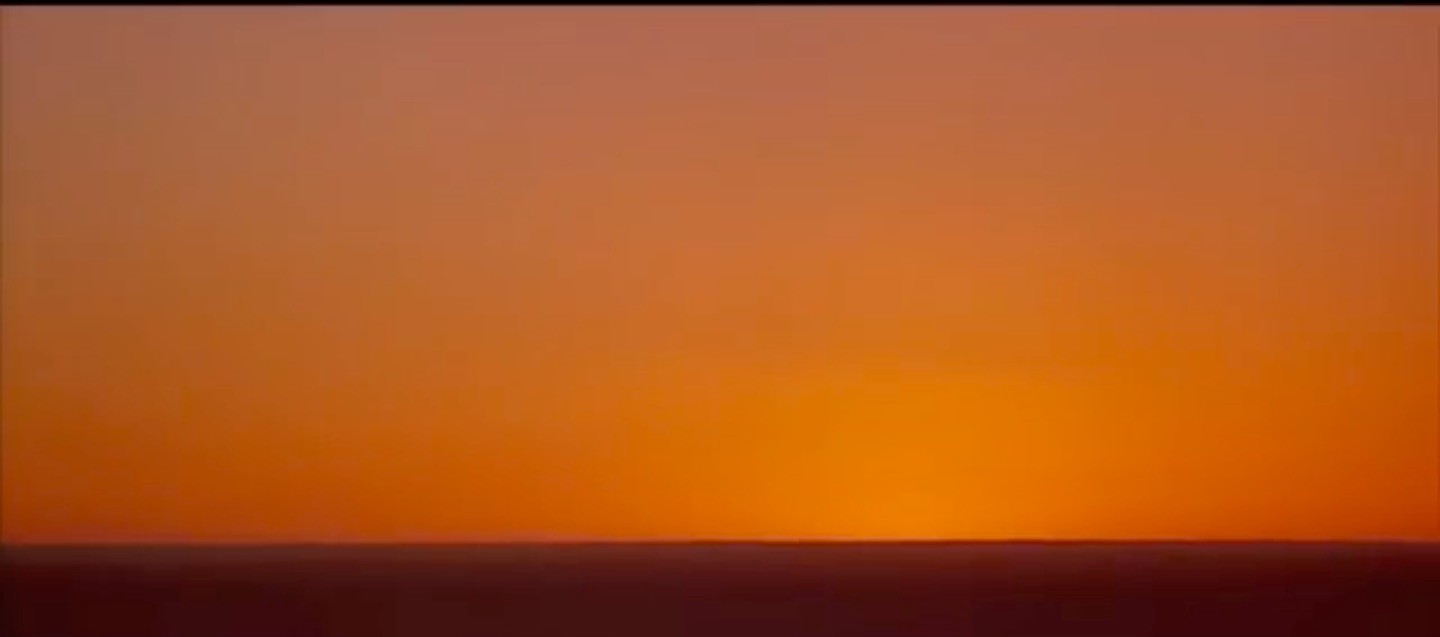
Anne V. Coates, the celebrated editor whose career has spanned 70 years, is eloquent on the broader impact of working at digital speed. She makes an excellent case that the automation of the editing process delivers less-considered work and has all but eliminated happy accidents. For example, Lawrence of Arabia (for which she won an Academy Award) includes a scene in which Lawrence blows out a match and then cuts directly to the sunset over the desert. The cut delivers a startling, thrilling visual. Coates observes that a dissolve was originally written in the script and if she’d been editing the film digitally the transition would’ve been added automatically. Instead, she was working with physical film that required manually cutting the film strips and taping them together, so the first edit had the film clips “butted together” without any transition added. When they watched the results of that first cut through the machine…“Magic.”

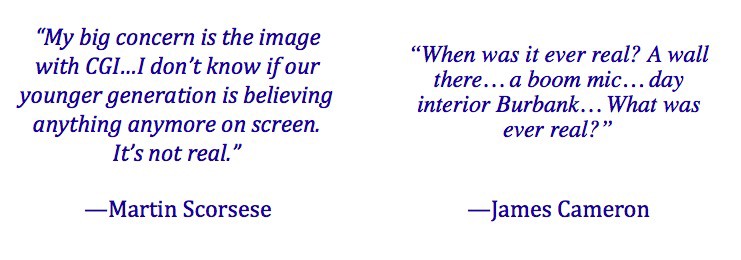
Early adopters of digital technology — Lucas, Cameron, Rodriguez, the Wachowskis, et al. — are known for inventing their worlds; much of their work is futuristic and fantastical. Early defenders for shooting on film — Scorsese, Soderbergh, Nolan — typically apply their vision to the world as it is and explore stories of the past and the present. From one angle, these groups can be boiled down to “fake versus real.” In a fake world, the audience is treated to superhuman visuals and challenged to think beyond corporeal limitations. In realistic films, audiences watch drama or comedy unfold between recognizably limited characters and are offered a touchstone for processing their own lives. Both of these experiences are powerful. Both have value. In 2017, only one is thriving.
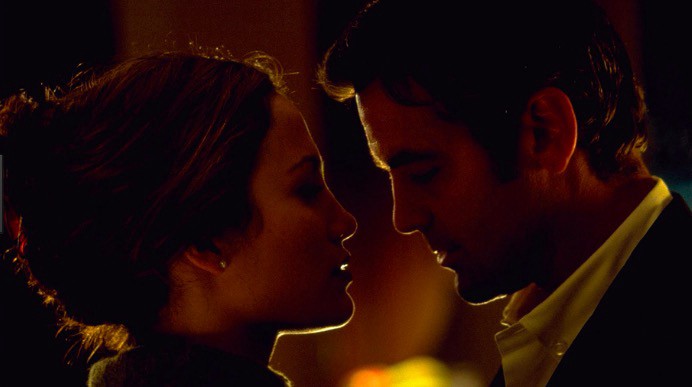
What has the changeover from film to digital cost us in terms of emotional depth? For me, the difference is palpable if not measurable. Even the work of visionaries like Lucas and Cameron has suffered slightly. Some of the most exhilarating moments of Titanic came from the film-shot grainy underwater footage of the ship itself. The visual experience of watching film, versus digitally-shot footage, is shades closer to real life. Those scenes anchored the film emotionally (if not literally.)

Meanwhile, Avatar was a visually stunning experience but it didn’t leave emotional fingerprints the way Titanic did. Similarly, I loved Star Wars before most of today’s technology was available and I don’t like what was done to the original films with the technology that has been developed since. There is an emotional connection to what we recognize as real. From theater to film to television to digital streaming, we’ve stepped farther and farther back from flesh and blood experience, ever-widening the space for others to reach in and manipulate what we see. The more we watch digitally perfected images, the less satisfied we become with real life, and the less prone we are to connect with it emotionally.
In 2017, these shades of the fake/real divide are central to digital’s impact on our political process. While politicians and pundits argue over what is real and what is fake, consumers of the information are less and less able to discern between the two on their own. It’s the information version of photoshopped models. When an altered image is presented to millions of people as real, there is mass diversion from reality. The same holds true for facts. The outcome is a misinformed populace.
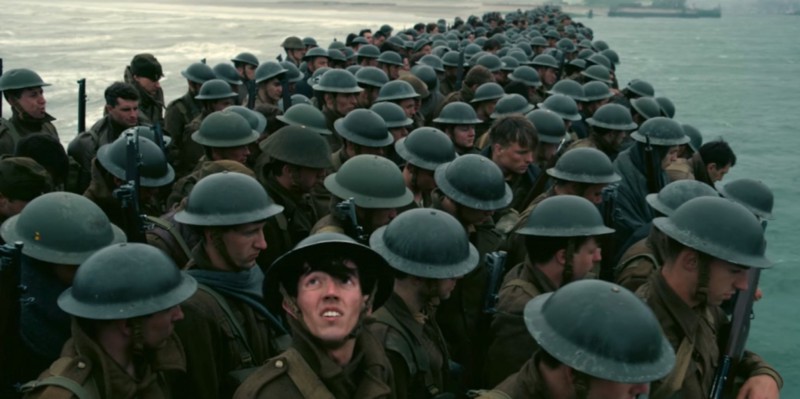
The final issue discussed in Side by Side may be the most salient for American politics in 2017. While the image quality of digital filming can be hashed out by filmmakers and camera developers, the choice to watch a film together in the theater is up to audiences. Michael Chapman’s comment that “cinema was the church of the 20th Century” feels right, and dated. The 21st Century is a world full of worshippers-on-the-go. Only streaming services and online video stores know a subscriber’s true religion.
The loss of a unifying arbiter of culture has untold implications. I suspect it’s responsible for the aggressive reactions I get when I say I don’t watch television. People recount entire shows for me on the spot, as though my reason for not watching is that I think I won’t enjoy it, not that I have limited time. In the midst of this unsettling revolution, people are unconsciously searching for common ground. Someone who doesn’t watch Game of Thrones or Girls is no longer simply missing out on something great. They’re perceived as a threat to the diminishing pool of broadly shared culture that binds us together. On this and so many other levels, fear of other has defined the digital revolution so far. If Hollywood’s experience is a predictor of our trajectory then we’ll fight our way out of this polarized state to find common ground again, and we’ll have cultural scars and bruises to show for it.
Critics reviewed Side by Side favorably in 2012 but noted its “inside” and “geek heaven” tendencies. In 2017, it is a film for everyone. We’re savvier by necessity, as digital technology has taken over the most important aspects of our lives: communication, organization, and archiving, or memory. We’re also reengaging vociferously with the political realm after several decades of relative quiet. As noted by Nancy Benac and Ben Nuckols for the Associated Press, “[the] Women’s March on Washington appeared to accomplish the historic feat of drawing more people to protest the inauguration than the ceremony itself attracted.” New forms of digital engagement are clearly having an effect on politics but it’s too soon to draw conclusions about where they will ultimately take us.
The digital revolution is an unfinished story. The internet has usurped much of our physical infrastructure, but a forced takeover doesn’t engender trust. With each incursion into our privacy, and with cyberattacks on the rise, people are increasingly aware of technology’s reach and they don’t like it. When a foreign country can damage our democracy and take away our freedom of choice by influencing our election through digital media, voters may finally see fit to push back. Silicon Valley has been an unapologetic proponent of the digital revolution. Baked into their philosophy is an anti-consumer approach: We tell you what you want. Some call that tastemaking, but the ubiquity of smartphones and computers means that the Facebooks of the world have too great an influence over events as important as our presidential election. In 2017, Silicon Valley has a lot to answer for.
As we grow with this rapidly expanding technology, it’s important to continually redefine our philosophy in a rapidly shifting context. Are we moving forward as a society? Is this technology helping or hurting us? Do the ways that we incorporate it serve our values? …and one question I couldn’t shake while writing this piece: Should we even call Side by Side a “film?”
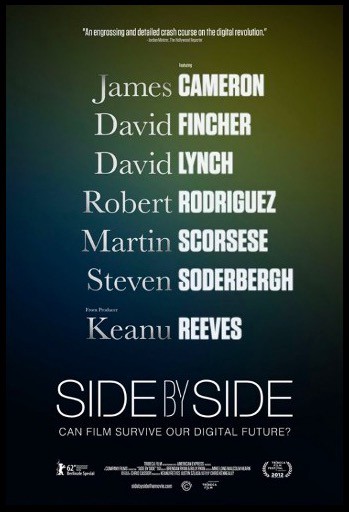
Side by Side is available to stream on Amazon, Netflix, iTunes, and elsewhere.
 Elizabeth McCarthy