Clare Graham’s Wonderland of Cast-Off Riches
There’s an early scene in Warren Beatty’s classic film REDS when a couple of great writers have their first lovers’ quarrel. The backdrop is 1916, on the eve of World War I, the Russian Revolution, and the first Red Scare in America, a time when it would be undignified for two top-flight political journalists to go head-to-head over tardiness for dinner, or whose turn it was to take out the trash. As such, Louise Bryant and Jack Reed naturally, bitingly, opt to level each other over the relevancy of their work and the all-consuming question of what to write. Jack shouts his way through this appraisal of Louise’s choices in light of current events:
Why do you even expect to be taken seriously if you’re not writing about serious things? I don’t understand that! I’m not even sure I know what things you’re serious about! One day you’re writing about the railroads and you don’t even finish the piece. The next day you’re doing a piece on an art exhibition that happened three years ago. Look, why do you give me anything to read anyway. If I criticize it at all you tell me you like it the way it is, and when we’re out with other people, if somebody doesn’t ask you a direct question you tell me you feel ignored! But with everything that’s happening in the world today you decide to sit down and write a piece on the influence of the goddamned Armory Show of 1913? Are people supposed to take that seriously?
The answer is yes.
In 2014, the world is once again in a state of turmoil so urgent and complex that it’s a daily chore to wade through the choices and finally plant a flag: Today I will write about this. This is important. Against the measuring stick of relevancy I’m compelled to write about Clare Graham’s art. His exhibition at the Craft and Folk Art Museum, Clare Graham & MorYork: The Answer is Yes, is more vital than ever in this millennium of successive global challenges. Graham holds the key to our future if we’re willing to contemplate it.
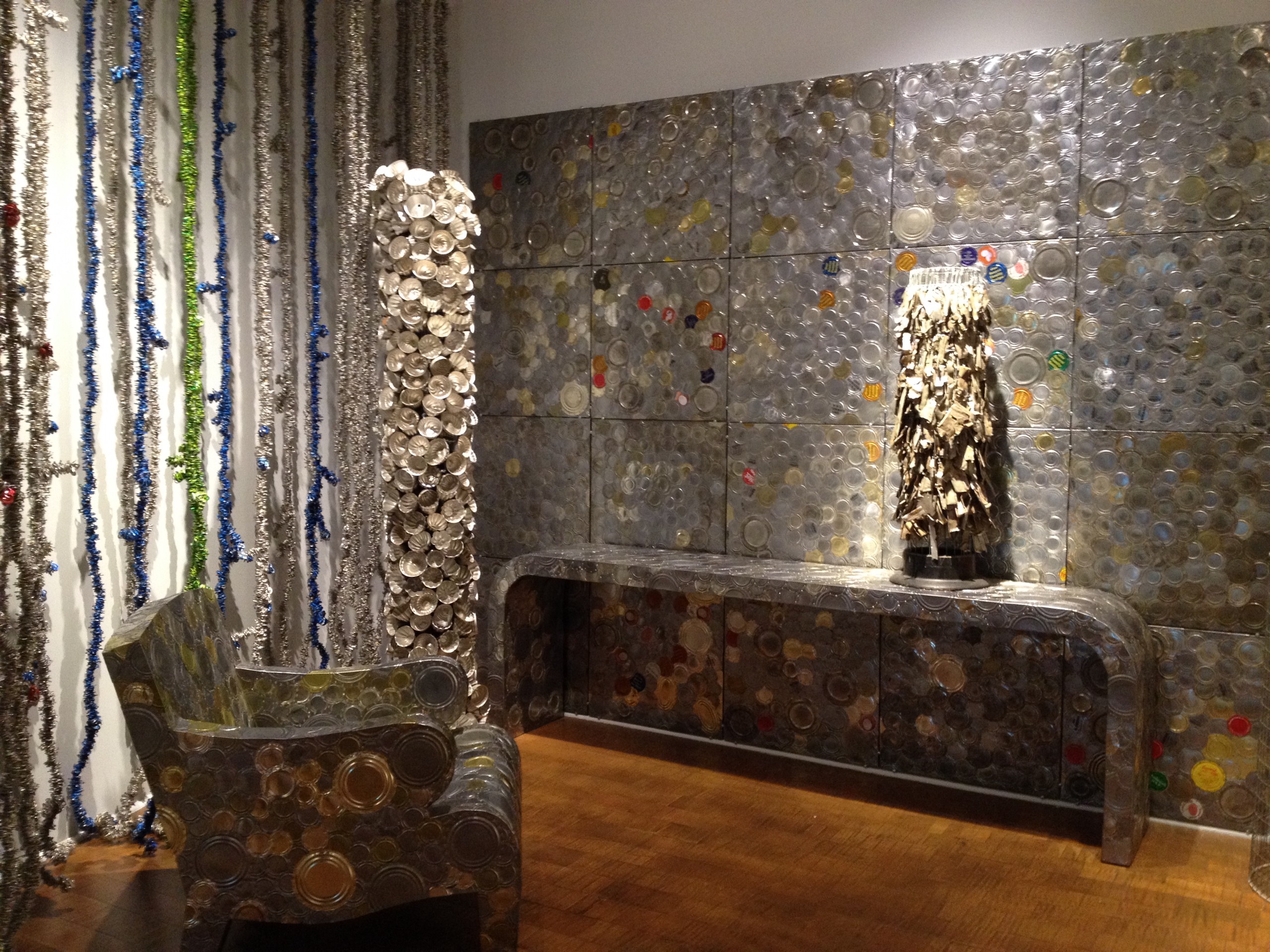
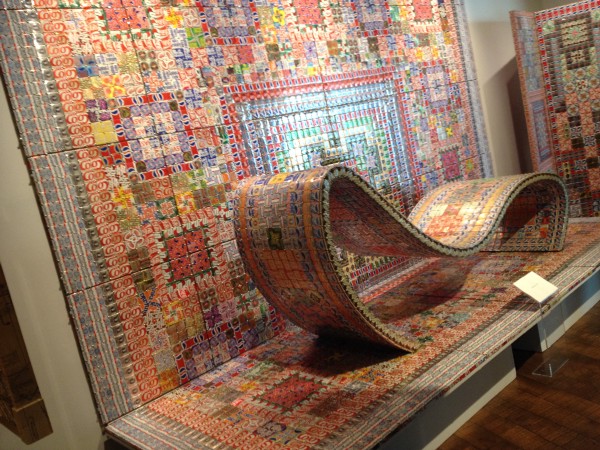
The entire 3rd floor of the museum is devoted to Graham’s furniture-adjacent pieces. A ranch-house layout gives the suggestion of seating areas comprising same-material objects that range from cut and hammered soda pop cans and bottle tops to buttons, shuttlecocks, and, memorably, a jar of teeth. The process of fashioning each piece of each mosaic, which one can only imagine was painstaking given the perfect symmetry and construction, is easy to take for granted. The wonder of Graham’s art is the seamlessness. Each chaise and armoire appears to have been born just so. Like the fabled orphans of 19th century literature, the discarded materials he gathers for his work weren’t destined for mundane lives.
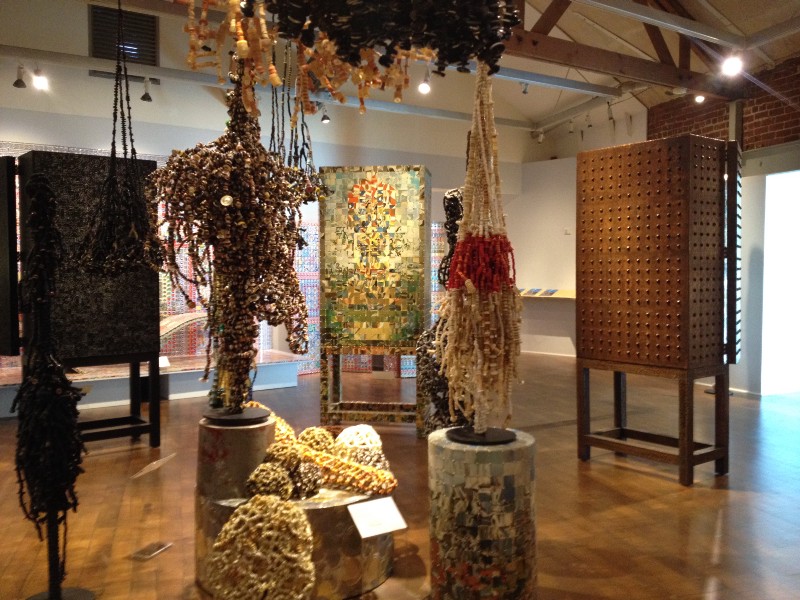
The main room showcases his taller cupboards that are made from dominos and mesmerising triptychs of paint-by-number canvases. The paint-by-number art was my introduction to Graham seven years ago when a 3×8 foot geisha-themed panel caught my eye in a gallery on Abbot Kinney Boulevard. I visited that panel for several years until it sold and the gallery owners were kind enough to put me in touch with the artist so I might find another piece to fall in love with.
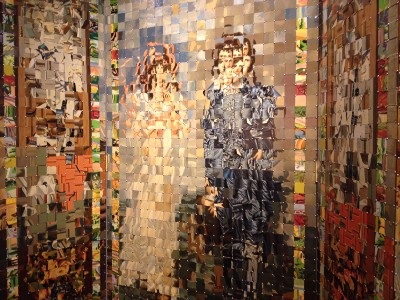
At the MorYork workshop I found a trove. In fact, there are far too many pieces to love. The workshop itself became the object of my affection. Thousands of square feet are packed with touchable, functional art. Although my affinity for words would indicate a preference for the scrabble tile cupboards that spell out passages from novels, I’m still most powerfully drawn to his paint-by-number pieces. I learned how each small canvas is painted, then cut into 2×2 squares and reassembled in a cubist echo of lovers, horses, or autumn leaves that would make Picasso and Braques fall, rhapsodic, into each other’s arms.
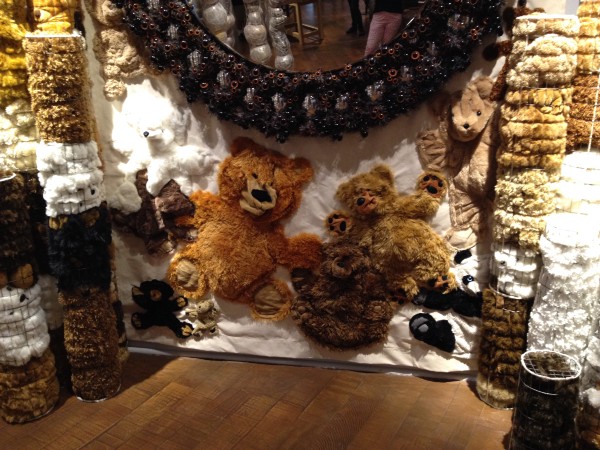
One side of the exhibition is devoted to dismembered teddy bears – probably my least favourite choice of material because it recalls a childhood with too few toys to cuddle. Unlike discarded game pieces and beverage containers, the teddy bears that never find their way to a child make me disconsolate. That is exactly the point of this show. Every material Graham uses is mass-produced without commensurate demand or obligation to utility despite the state of our environment. Need does not equate with inventory in any logical sense. Consumerism drives manufacturing only to generate piles of surplus (“more-more”) merchandise in warehouses and factories across the country to await Graham’s discovery, vision and touch.
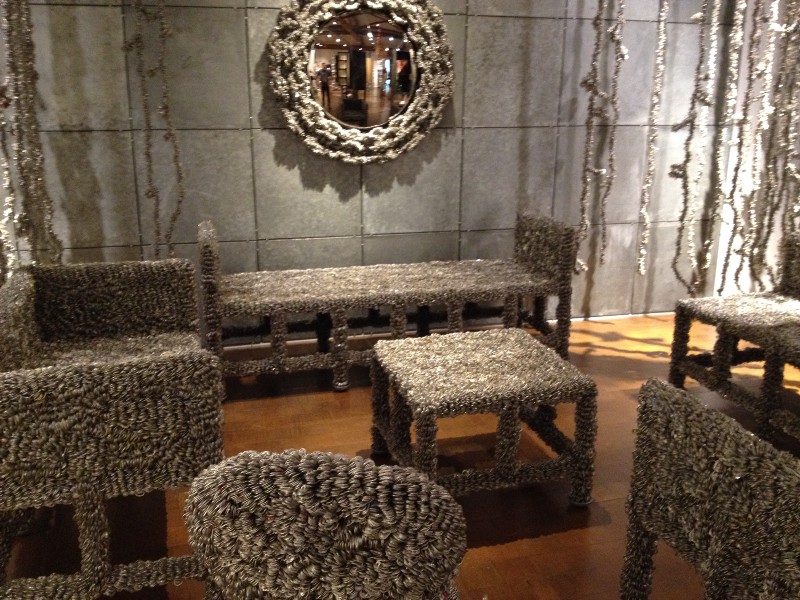
The show has a “this is our house” feeling to it, and on a second walkthrough the dread creeps in. We are all culpable for this waste. We heedlessly accumulate so much we don’t need and never use. For all of the pop tops in Graham’s living room, how many more are floating in the ocean or permanently abandoned in a landfill? His use for these objects demonstrates that the tragedy in wastefulness can be redeemed. He has made something beautiful from America’s refuse and the results are gruesome, funny and most of all practical. We’re invited to sit on our cast-offs, read our literature on the sides of cupboards, and stare at a wall of empathic plastic eyes to contemplate what we might do next.
It’s possible this is what Louise Bryant was thinking as she sat down to write about an art show on the eve of so many wars. It’s possible her unfinished railroad piece was merely a springboard to the train she soon rode across central Europe into Russia to witness Lenin’s victory march into the Kremlin. For anyone who asks whether there is something they can do, or something to be done, Clare Graham offers an elegant answer: Yes.

Clare Graham & MorYork: The Answer is Yes, September 13, 2014 — January 4, 2015
The Craft and Folk Art Museum, 5814 Wilshire Blvd., Los Angeles, CA 90036
Admission is Free on Sundays
 Elizabeth McCarthy